
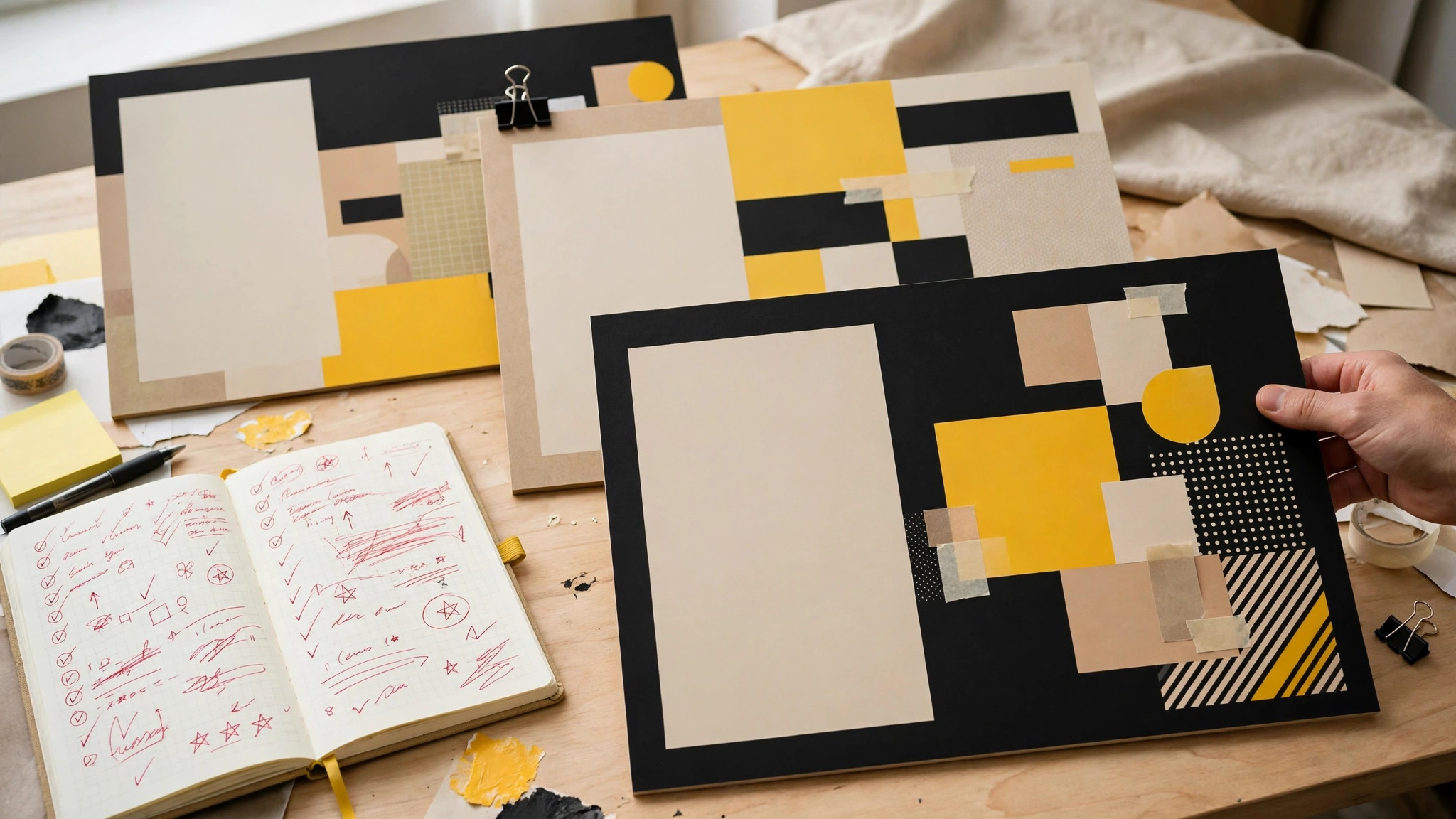
The bottleneck in advertising used to be production. Writing the ad, designing the ad, filming the ad — each one cost time or money, so you made a few, argued about them, and ran the winner until it died.
AI agents removed that bottleneck in about eighteen months. Give a marketing agent your campaign data, a library of past creative, and access to the tools where ads actually get made, and it will happily produce fifty variants before your coffee cools. Static ads in an afternoon. UGC-style avatar videos — the kind tools like HeyGen generate from a script — for a fraction of a traditional shoot.
That sounds like a superpower. For most small teams, it becomes a trap.
Because the bottleneck didn’t disappear. It moved. It now sits in the one place nobody staffed: deciding what each test is supposed to teach you. Fifty ads with no hypothesis behind them is not a testing program. It’s a slot machine with better graphics. This article is the system that turns agent-made volume into actual learning — the same discipline big media teams run, rebuilt for a one- or two-person operation with a jungle budget.
What Changes When Agents Join the Ad Team
In the workflow Greg Isenberg and Cody Schneider walk through, the agents aren’t just copy machines. They sit inside the operation:
- They read campaign data. Performance from your ad platforms — Meta, Google Ads, TikTok — gets pulled into one place, so creative decisions start from what already happened, not from vibes.
- They study a creative reference library. Your past winners, your competitors’ best work, and ads you admire live in a swipe file the agents can actually reference, so new drafts start from proven patterns instead of a blank page.
- They draft across formats. The same idea becomes a static image ad, a short script, and an avatar-delivered UGC-style video, because different formats reach the same buyer differently.
- A creative-director agent reviews. Before anything reaches a human, a reviewing agent checks drafts against the brief, the library, and the claims the product can honestly support.
Notice the order. Data first, library second, generation third, review always. Teams that start at step three — “make me twenty ads” — get twenty ways to say nothing. Teams that build the first two steps get an agent that improves every week, because it learns from your results and your taste, not just its training.
Start With Three Reasons Someone Might Buy
Here is the single most important rule in this system: one ad, one hypothesis.
Before any agent generates anything, write down the distinct reasons a real person might buy. For a downloadable marketing field kit, three honest motives might be:
- Speed: “I want a promotion I can run this weekend, not a course I’ll finish someday.”
- Judgment: “I want a way to decide whether an ad is worth funding before I spend.”
- Leverage: “I want a structure for turning content I already have into leads.”
Those are three different buyers wearing the same face. An ad built for motive one should look nothing like an ad built for motive two — different hook, different proof, different first three seconds. Ask your agent to draft one ad per motive, anchored in real material: your actual product page, real sample pages, and anonymized versions of questions prospective buyers have genuinely asked you.
Then hold everything else constant. Same audience. Same landing page. Same offer. Name each creative after its hypothesis — Speed-Weekend-v1, Judgment-Funding-v1 — so when results come in, you’re reading a lab report, not a pile of files called final_FINAL_3.
If one concept earns attention, the next test isn’t a new concept. It’s two sharper expressions of the same concept. Learning compounds when you change one variable at a time. A campaign that swaps the headline, the audience, the offer, and the checkout simultaneously has tested four things and learned nothing — the marketing equivalent of changing every ingredient and wondering why the recipe tastes different.
Build the Library Before You Brief the Agent
Agents draft from what you feed them. Feed them nothing and you get the average of the internet — which is exactly what your competitors’ agents are producing.
Your creative reference library doesn’t need warehouse infrastructure on day one. It needs three folders:
- Winners: every ad, email, and post that ever made you money, with the result written next to it.
- Reference: competitors’ and adjacent brands’ creative you respect, tagged by the motive it targets — speed, judgment, leverage, status, relief.
- Voice: your product pages, your best customer replies, your FAQ. The raw material that makes an ad sound like you instead of like everyone.
Tools you already use can hold this: a shared drive, a Notion board, even a disciplined folder structure. The format matters less than the habit — every test result gets filed, every winner gets tagged with why it won, as far as you can tell. In three months, that library is the most valuable marketing asset you own, because no competitor can copy your results history.
When the reconciling starts eating real time — pulling numbers from three platforms, matching creative IDs to orders by hand every week — that’s the signal to graduate to a proper data warehouse. Not before. Infrastructure should follow pain, not precede it.
Give the Reviewer Authority to Reject
Most teams use a reviewing agent as a spellchecker. That’s a waste. Give yours a kill list — specific grounds on which it must reject a draft and send it back:
- Hook–promise mismatch. The ad’s opening claim must be the same promise the landing page makes, in the same terms. If the ad sells speed and the page sells depth, the click was bought under false pretences and the bounce is your fault.
- Unfaithful demonstration. If the ad shows the product doing something, the product must actually do that thing, that way. AI generation makes it dangerously easy to depict a feature that doesn’t exist.
- Unsupported evidence. Every number, testimonial, and result in the ad needs a source you can point to. If a claim can’t be traced, it gets cut — not softened, cut.
- Off-voice. If your customers wouldn’t recognise the language as yours, it doesn’t ship, however clever it is.
And keep two approvals stubbornly human: spend and anything presented as a testimonial or performance result. An agent can recommend a budget. A person signs for it. That line is not bureaucracy — it’s the difference between a testing program and a liability generator, and it takes thirty seconds per ad to hold.
Drafting tools like Claude and ChatGPT handle the variant generation well; design tools like Canva and video tools like CapCut cover layout and quick edits. The stack is not the strategy. The review standard is.
Read Results Where Behaviour Changes
The last discipline is interpretation — deciding what a result means before you generate the next round.
Link every creative ID to three numbers in a simple sheet: outbound clicks, product-page visits, and orders. That’s enough to read the story:
- Many clicks, few checkouts: the ad is doing its job and the page or offer isn’t. Fix the page before you brief another variant — more traffic into a leaking bucket is just a faster leak.
- Low initial interest: the message or the audience is wrong. Test a different motive from your list of three, not a louder version of the same one.
- Strong clicks, strong checkouts, small numbers: you may have a winner that simply needs budget and time. Resist the agent’s urge to immediately produce twenty children of it. Confirm it first.
Creative volume is valuable for exactly one reason: each additional variation should produce a decision. Keep, kill, or refine. If a test can’t end in one of those three words, it wasn’t a test — it was content.
The Jungle Version: Small Team, Real Discipline
You don’t need an agency, a data team, or a warehouse to run this. You need a one-page brief, a three-folder library, a reviewer with a kill list, and a sheet with three columns. The agents supply the volume. You supply the hypotheses, the taste, and the signature on the spend.
That’s the whole guerrilla trade in 2026: the machines made ads cheap, so the scarce skills became knowing what to test, recognising what the result means, and having the nerve to kill your favourite ad when the numbers vote against it.
Related Products
Gorilla Marketing Traffic Secrets — $27. The full traffic system this testing workflow plugs into: where the clicks come from before you optimise what they land on. Get it on Gumroad
Automate the Follow-Up: The Workbook — $17. Tests bring the clicks; follow-up turns them into revenue. The templates and sequence for every inquiry, quote, and quiet customer. Get the Workbook
Keep Reading on Gorilla Marketing
- Automate the Follow-Up — the system behind Move 9 of every campaign: timing automated, personality human.
- Guerrilla Marketing With AI: 9 Low-Budget Moves That Look Like a Big Team Did Them — the organic companion to this paid-testing playbook.
Insights — what to take from this
- Production is no longer the bottleneck in advertising. Decision-making is. Volume without hypotheses is a slot machine, not a testing program.
- One ad, one hypothesis: draft against three distinct buyer motives, hold audience and landing page constant, and name every creative after the idea it tests.
- Your creative reference library — winners, reference, voice — is the asset that makes your agent’s output yours. File every result; tag every winner with why it won.
- Give the reviewing agent a kill list (hook–promise mismatch, unfaithful demonstration, unsupported evidence, off-voice) and keep spend and testimonial approvals human.
- Read results where behaviour changes: clicks without checkouts indict the page, not the ad.
Action Plan
- Today (30 minutes): Write your three buyer motives. Pull them from real customer questions and your product page — not from imagination.
- Today (45 minutes): Build the three-folder library: Winners, Reference, Voice. Seed it with every ad or post that ever made money, with its result noted.
- Day 2 (1 hour): Brief your agent for one ad per motive. Name each creative after its hypothesis. Keep audience, offer, and landing page identical across all three.
- Day 2 (30 minutes): Set up the reviewer kill list — hook–promise match, faithful demonstration, sourced claims, on-voice — and route every draft through it before human eyes.
- Days 3–7: Run the three ads on a small, fixed budget. Log creative ID → clicks → page visits → orders in one sheet.
- Day 7 (30 minutes): Read the results where behaviour changes. Decide keep, kill, or refine for each. If one motive wins, brief two sharper expressions of that same motive — change nothing else.
- Week 2: Repeat the loop. Only add warehouse tooling when the weekly reconciliation by hand takes more than an hour.
Leave a Reply